
Google Fitbit Air Review: A Screenless Activity Tracker for Everyday Health Tracking
The Google Fitbit Air is a screenless activity tracker designed for discreet, continuous health monitoring. It combines activity, heart rate, and sleep tracking with personalized AI-powered coaching through Google Health. Its lightweight, micro-adjustable design, compatibility with iOS and Android, and battery life of up to seven days make it a practical option for users who want wearable insights without the distractions of a smartwatch display.
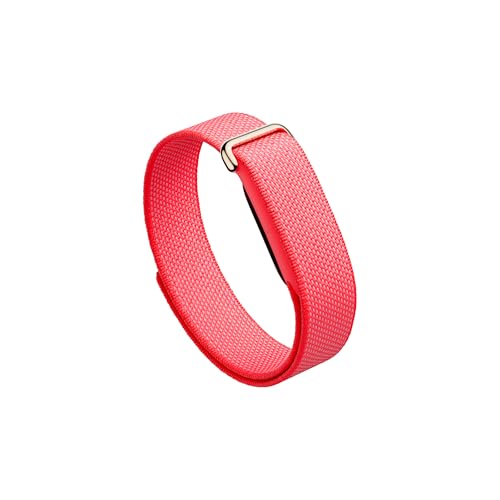
Google Fitbit Air - Screenless Activity Tracker, Berry | Fitness, heart rate, & sleep tracking, personalized AI-powered coaching, up to 7 days’ battery life, works with iOS & Android
SHOP NOW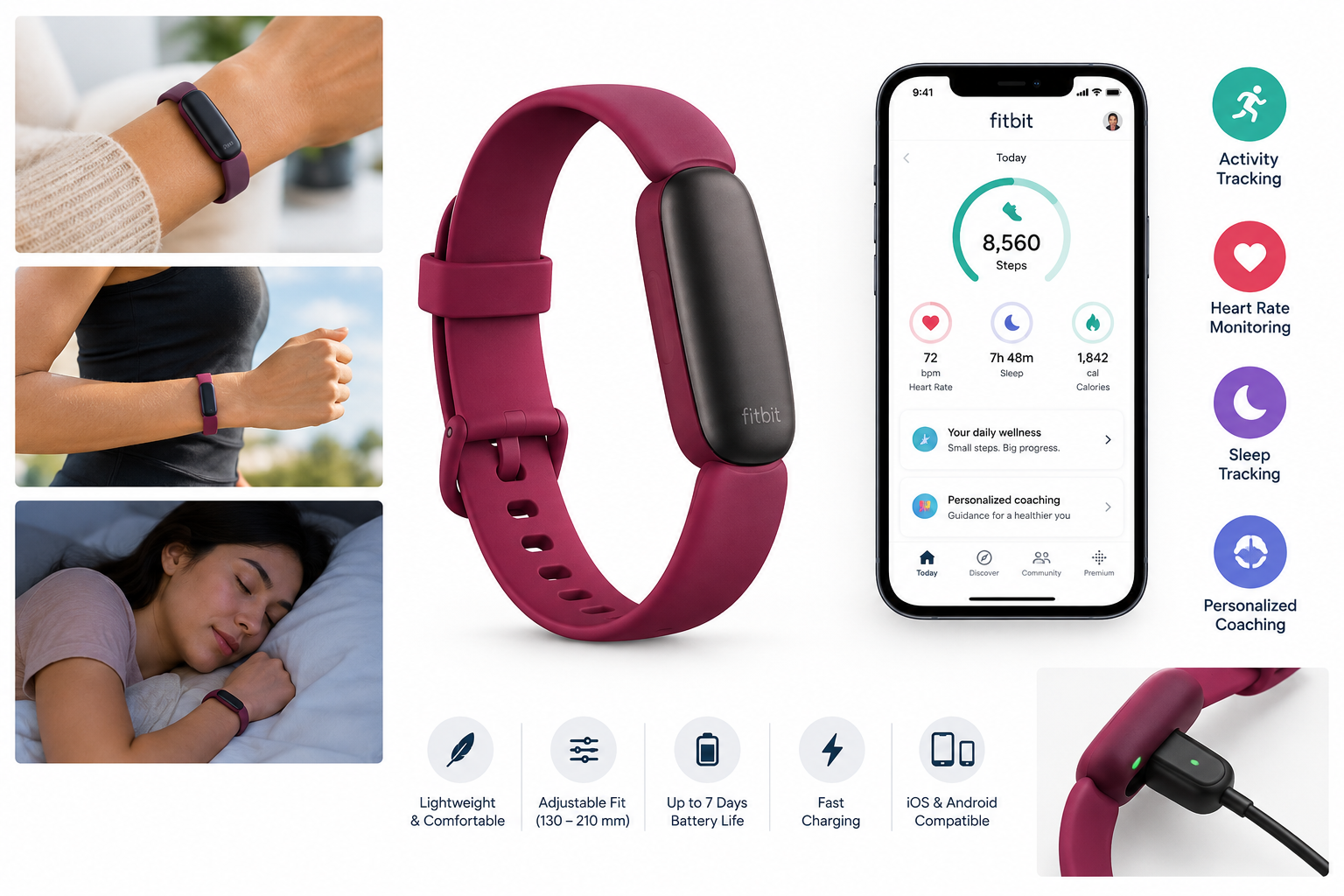
Product Summary
The Google Fitbit Air – Screenless Activity Tracker, Berry is a compact wearable focused on passive health and activity tracking rather than on-device notifications or apps. Its screenless design keeps the tracker visually minimal and helps reduce the interruptions associated with display-based smartwatches.
The tracker is designed to monitor daily activity, heart rate, and sleep while working with the Fitbit and Google Health ecosystem. It supports personalized coaching features, including AI-powered guidance through Google Health Premium, and is compatible with both iOS and Android devices. Fitbit states that the tracker can provide up to seven days of battery life, with fast charging intended to restore a full day of use in a short period.
Target Users
The Google Fitbit Air is best suited to users who:
- Want continuous health and activity tracking without wearing a smartwatch
- Prefer a lightweight, discreet wearable for work, exercise, and sleep
- Are interested in heart rate, sleep, and general activity insights
- Use either an iPhone or Android smartphone
- Prefer reviewing data in a mobile app instead of on a wrist-mounted display
- Want access to personalized coaching within the Google Health ecosystem
It may be less suitable for people who need built-in GPS, on-device workout statistics, music controls, maps, mobile payments, or real-time notifications.
Main Benefits
Screenless and Distraction-Free Design
The absence of a display makes the Fitbit Air less visually intrusive than a smartwatch. Users can track health metrics without being encouraged to check messages, alerts, or apps throughout the day.
Continuous Health Tracking
The tracker is designed for around-the-clock use and supports activity, heart rate, and sleep tracking. This makes it useful for identifying longer-term patterns rather than relying only on occasional workout sessions.
Personalized Coaching
Google Health can combine tracked data with personalized guidance. Users who activate Google Health Premium may receive coaching features built with Gemini, although the premium service is separate from the hardware.
Comfortable, Adjustable Fit
The one-size tracker is designed for wrists measuring approximately 130 to 210 millimeters. Its micro-adjustable construction is intended to remain comfortable during daily wear, workouts, and sleep.
Broad Smartphone Compatibility
The Google Fitbit Air works with iOS and Android devices, giving it wider compatibility than wearables that are closely tied to one mobile operating system.
Long Battery Runtime
With up to seven days of claimed battery life, the tracker should require less frequent charging than many display-equipped smartwatches. Fast charging can also be useful when the battery needs a quick top-up before a workout or overnight tracking session.
Key Considerations
The screenless format is both the product's defining advantage and its main limitation. All detailed data, trend analysis, and coaching feedback must be viewed through a connected smartphone. The tracker is therefore better considered a companion to the Fitbit and Google Health apps than a standalone smartwatch.
Users should also consider the role of optional services. Some advanced coaching functionality is connected to Google Health Premium, which is sold separately. Buyers who only want basic tracking may not need the subscription, but those seeking more extensive coaching should review the service requirements before purchasing.
The product is focused on wellness and fitness insights rather than medical diagnosis. Heart rate, sleep, and activity data should be treated as general health information and not as a replacement for professional medical advice.
Pros
- Screenless design minimizes distractions
- Supports activity, heart rate, and sleep tracking
- Personalized coaching is available through the Google Health ecosystem
- Works with both iOS and Android smartphones
- Lightweight, micro-adjustable fit is designed for all-day and overnight wear
- Up to seven days of claimed battery life
- Fast charging can provide a quick battery boost
- Can transition between everyday, workout, and sleep-focused use
Cons
- No built-in display for checking data at a glance
- Requires a smartphone for detailed results and trends
- Does not provide the smartwatch functions associated with maps, mobile payments, or on-device apps
- Advanced coaching features may require a separate Google Health Premium subscription
- Users who want live workout metrics may find the screenless design limiting
Alternatives
The most relevant alternatives depend on the type of experience you want. A screen-equipped Fitbit tracker may be a better fit for users who want to view workout information, steps, or notifications directly on the device. A full smartwatch is more suitable for GPS, calls, mobile payments, music controls, and interactive apps. Conversely, another screenless fitness wearable may appeal to users who prioritize discreet tracking and a minimal design.
Compared with these categories, the Google Fitbit Air is positioned between a traditional fitness band and a passive health-monitoring wearable. Its main advantage is the combination of discreet hardware, Fitbit-based tracking, and Google Health coaching rather than a broad set of smartwatch features.
Conclusion
The Google Fitbit Air is a focused activity tracker for people who want ongoing health insights without the visual distractions of a smartwatch. Its screenless design, comfortable adjustable fit, heart rate and sleep tracking, broad smartphone compatibility, and up to seven days of battery life make it well suited to everyday wellness monitoring.
Its limitations are equally clear: the device depends on a smartphone for detailed information and does not provide the interactive features found on screen-equipped wearables. For users who value simplicity, passive tracking, and a low-profile design, the Google Fitbit Air is a compelling option. Those who want on-device data, GPS, or smartwatch functionality should consider a display-based alternative instead.