
Rainbow Friends Playground Review: A Physics-Based 2D Puzzle Sandbox
Rainbow Friends Playground is a 2D ragdoll physics game built around platforming, obstacle courses, puzzle-solving, and creative sandbox experimentation. This review examines its physics-based gameplay, level variety, visual presentation, accessibility, and the trade-offs of its unconventional control style.
Product Context
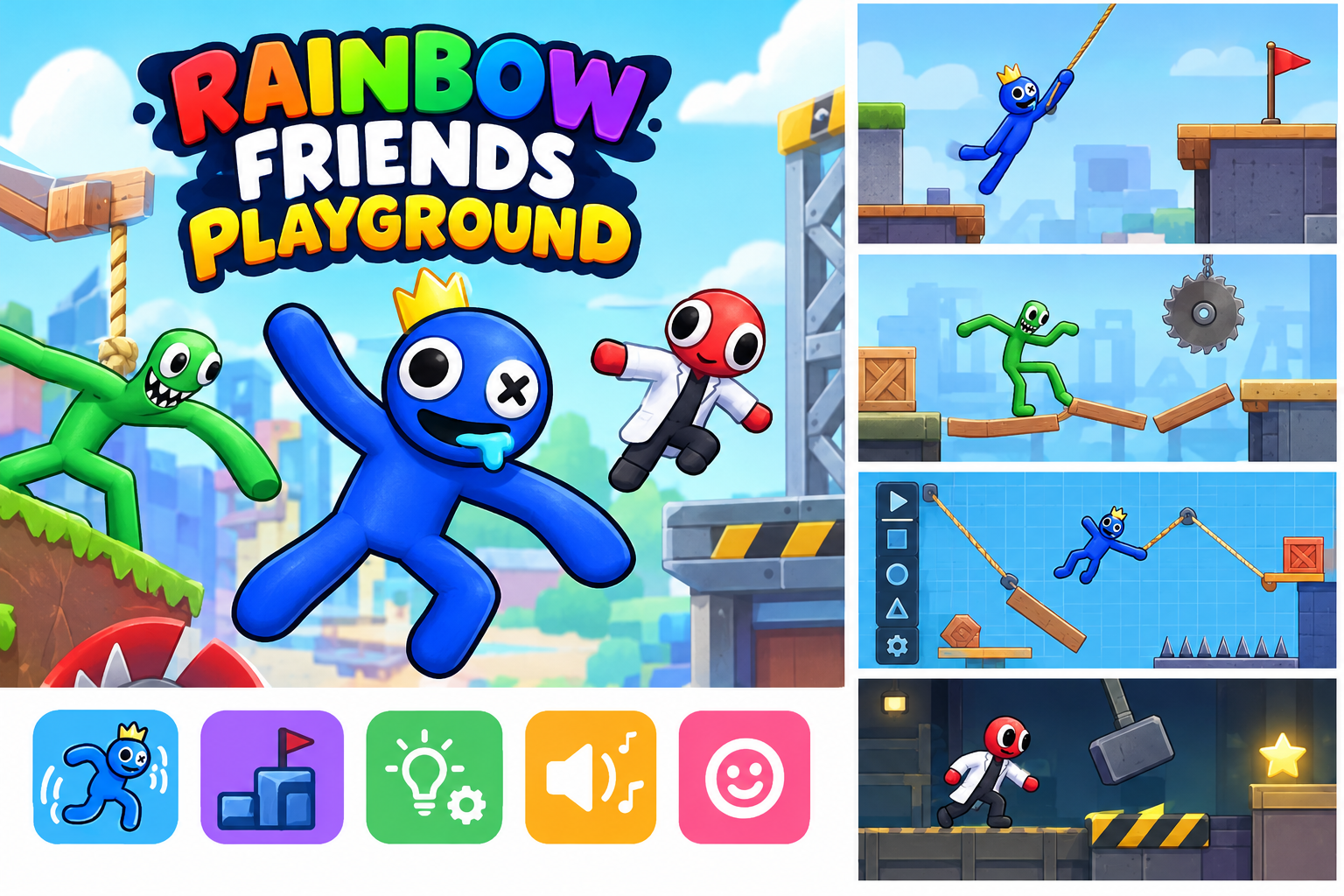
Rainbow Friends Playground is a 2D physics-based adventure game centered on controlling a flexible ragdoll character through obstacle-filled environments. Instead of relying solely on traditional platforming mechanics, the game emphasizes momentum, limb movement, balance, and interactions with ropes, platforms, gaps, and mechanical obstacles.
The game is designed for players who enjoy casual puzzle games with experimental physics and unpredictable movement. Alongside its structured levels, it includes a sandbox mode intended for creating and testing custom challenges.
Feature Breakdown
Physics-Based Character Control
The defining feature is the ragdoll-style movement system. Players must manage the character's body and momentum to navigate platforms, swing from ropes, cross gaps, and overcome environmental hazards. This approach creates gameplay that is less precise than conventional platformers but potentially more varied and humorous.
Structured Levels
The main game includes multiple levels with different obstacles and layouts. Each stage is designed around physics-based problem-solving, requiring players to observe the environment and determine how to move the character safely through it.
Sandbox Mode
Sandbox gameplay provides a more open-ended experience. Rather than simply completing preset stages, players can experiment with the physics system and construct custom challenges. This gives the game additional replay value for users who enjoy trial-and-error experimentation or level creation.
Animated Presentation
The game uses colorful animated visuals and sound effects to support its playful tone. The presentation is focused on readability and entertainment rather than realism, matching the lighthearted nature of the ragdoll mechanics.
Performance Insights
Rainbow Friends Playground's gameplay concept is strongest when the physics system produces unexpected but manageable outcomes. Swinging, climbing, balancing, and navigating unstable platforms can make ordinary movement feel like a puzzle of its own.
The physics-driven design also means that progress may depend on repeated attempts. Small changes in timing, positioning, or momentum can affect the result, so players should expect experimentation rather than perfectly predictable controls. This can be entertaining for users who enjoy discovery, although it may feel imprecise to players who prefer direct and highly responsive platforming.
The sandbox mode broadens the experience beyond the built-in levels. Its value depends on how much time a player is willing to spend testing ideas and refining custom challenges, but it provides a useful alternative to the more structured campaign-style content.
Usability
The game's basic concept is easy to understand: control a flexible character, interact with the environment, and reach the objective. However, the ragdoll mechanics may require an adjustment period because movement is governed by physics rather than simple left, right, jump, and attack actions.
Players who enjoy experimentation should find the controls engaging, particularly when learning how different objects respond to the character. Newcomers may need several attempts to develop a consistent approach to swinging, landing, and navigating narrow spaces.
The colorful presentation and level-based structure make the game approachable for casual sessions. At the same time, the sandbox mode offers more depth for users who want to create or explore scenarios beyond the standard levels.
Trade-Offs
Strengths
- Physics-based gameplay creates unusual and unpredictable challenges.
- Multiple levels provide structured objectives and varied obstacles.
- Sandbox mode adds creative experimentation and replay potential.
- Colorful animation and sound effects reinforce the game's playful style.
- Suitable for players who enjoy casual puzzle and platforming concepts.
Limitations
- Ragdoll movement may feel imprecise compared with conventional platform games.
- Progress can require repeated attempts and trial-and-error learning.
- Players seeking competitive action or complex storytelling may find the experience limited.
- The long-term appeal of sandbox mode depends on personal interest in creating custom challenges.
Conclusion
Rainbow Friends Playground is a distinctive 2D ragdoll physics game that combines platforming, puzzle-solving, and sandbox experimentation. Its main appeal comes from the way movement and environmental interactions create challenges that are difficult to solve through reflexes alone.
The game is best suited to players who enjoy casual physics puzzles, unconventional controls, and humorous trial-and-error gameplay. Those who prefer precise platforming or a story-driven adventure may find the ragdoll mechanics less satisfying, but players looking for a creative and unpredictable physics-based experience may appreciate what it offers.